

KLI Colloquia are invited research talks of about an hour followed by 30 min discussion. The talks are held in English, open to the public, and offered in hybrid format.
Join via Zoom:
https://us02web.zoom.us/j/5881861923?omn=85945744831
Meeting ID: 588 186 1923
Fall-Winter 2026/27 KLI Colloquium Series
1 October 2026 (Thurs) 3-4:30 PM CET
Scientific Integration as Fit: The Developmental Biases of Interdisciplinarity
Olesya BONDARENKO (KLI)
8 October 2026 (Thurs) 3-4:30 PM CET
The Role of Conversational Cues in the Co-Evolution of Language and Cooperation
Theresa MATZINGER (University of Vienna)
5 November 2026 (Thurs) 3-4:30 PM CET
Kin Matters: An Intervention in the Fragile Sciences
Robert A. WILSON (University of Western Australia)
19 November 2026 (Thurs) 3-4:30 PM CET
Modeling the Evolution of Human Early Embryogenesis with Stem Cells
Nicolas RIVRON (Institute of Molecular Biotechnology/IMBA, Vienna)
3 December 2026 (Thurs) 3-4:30 PM CET
Peter TURCHIN (Complexity Science Hub, Vienna)
10 December 2026 (Thurs) 3-4:30 PM CET
On the Cultural Macroevolution of Intentional Cranial Modifications
Marcelo SÁNCHEZ-VILLAGRA (University of Zurich)
14 January 2027 (Thurs) 3-4:30 PM CET
DNA from Archaeological Sediments as a Tracer for Past Societies
Benjamin VERNOT (University of Vienna)
28 January 2027 (Thurs) 3-4:30 PM CET
Beyond Fear: How the Amygdala Links Interoception and Exteroception
Ronald SLADKY (University of Vienna)
KLI Colloquia 2014 – 2026
Event Details
Topic description / abstract:
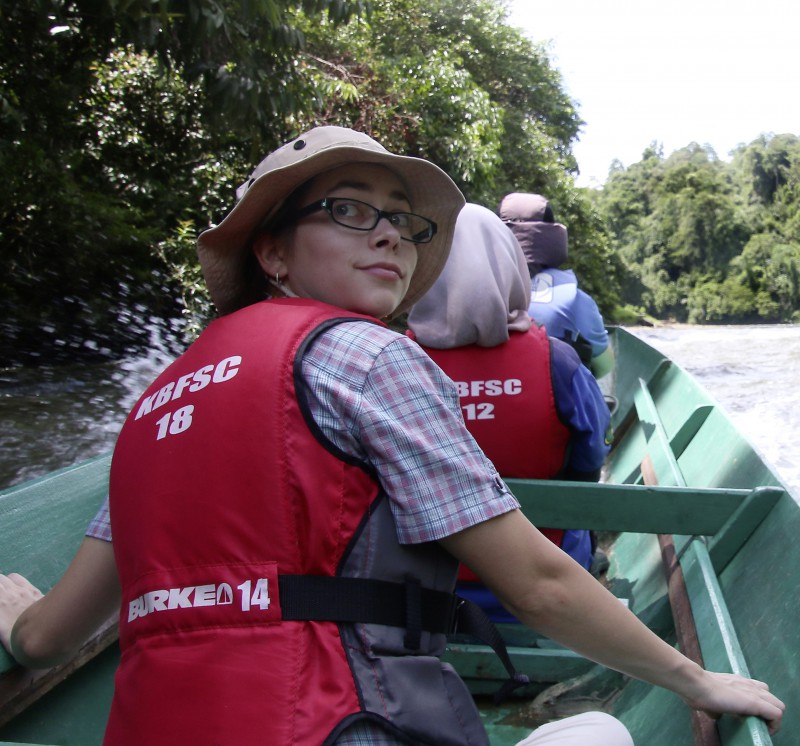
A multidisciplinary project titled “Voluntary self-sacrifice in exploding ants: a mechanism to defend coevolved microbiomes?” explores the evolution, phylogeny, and ecology of the “exploding ants” of the Southeast Asian Colobopsis cylindrica (COCY) group. These ants are best known for their unique defensive behaviour: In territorial combat, minor workers can rupture their integument to release the sticky and toxic contents of their enlarged mandibular gland reservoirs, thereby killing their rivals and themselves. Such voluntary self-sacrifice (autothysis) is very rare in nature and hitherto only known in social insects.
In addition to their “explosive” workers, COCY ants possess a second helper caste termed soldiers or “doorkeepers”. With their enlarged and truncated heads, these animals close nest entrances (phragmosis) to defend the colony against intruders. In rare cases, morphologically aberrant individuals infected by mermithid nematodes have also been discovered. The specialized structures of the respective castes, as well as the developmental perturbations caused by parasites are being investigated within the project, in hope of shedding light on the evolution and development of these enigmatic insects.
Biographical note:
Alice Laciny (*1989) is a PhD student at the Department of Theoretical Biology at the University of Vienna and is currently completing her thesis in the course of the WWTF project “Voluntary self-sacrifice in exploding ants: a mechanism to defend coevolved microbiomes?” at the Natural History Museum Vienna. She has been fascinated by insects from an early age and recently became president of the Austrian Entomologists' Association. Her scientific interests include myrmecology, parasitology, evolutionary developmental biology, and caste-characterization of social insects via morphological, statistical, and behavioural methods.
